
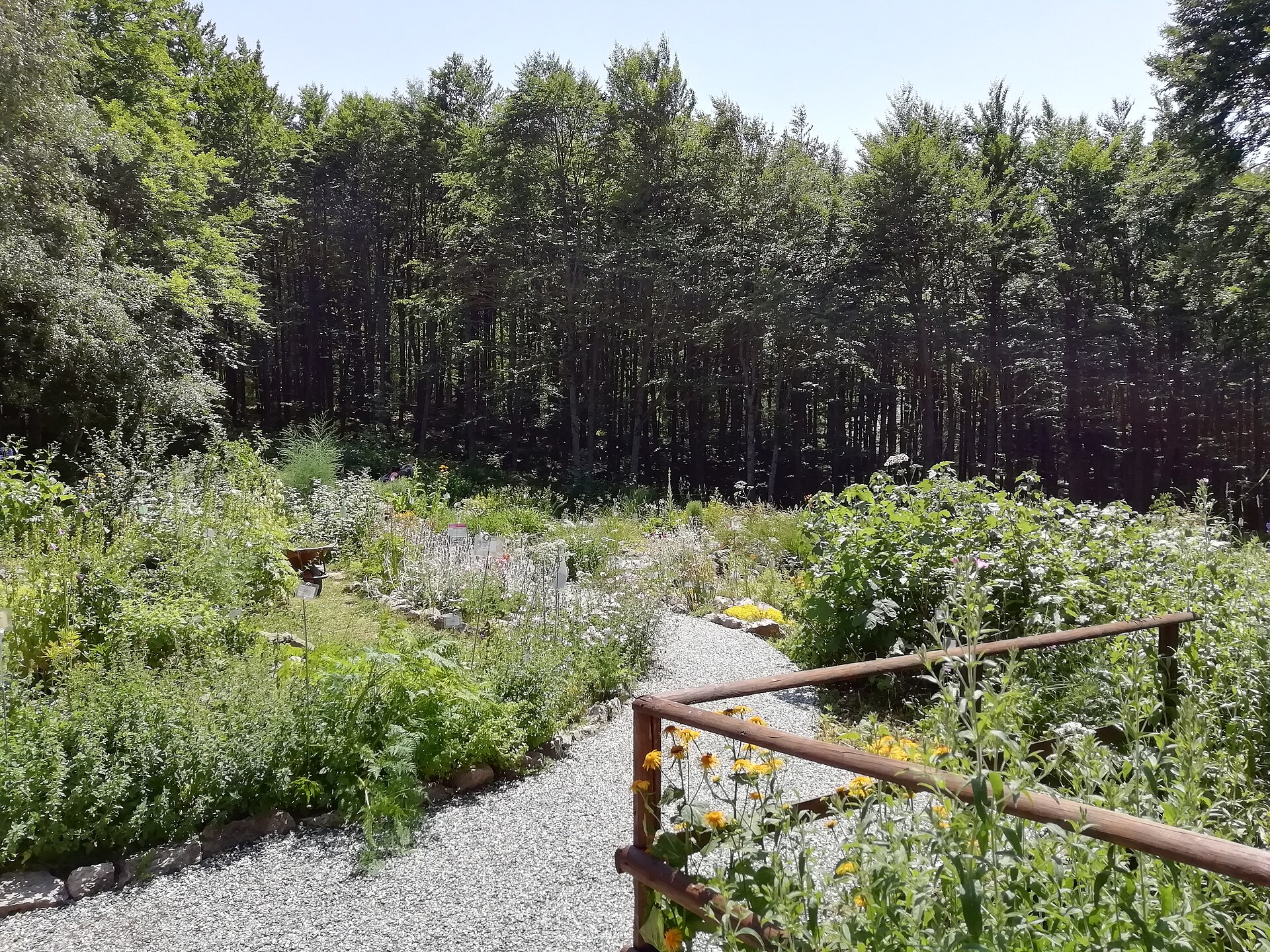
At Passo del Lupo, about four kilometres from Sestola and 1,500 metres up, the Modena section of the Italian Alpine Club (CAI) has looked after a small mountain garden for decades. The idea was born in the 1930s with the CAI Scientific Committee and the botanist Emilio Chiovenda; in 1952 it opened as an experimental centre for medicinal herbs, and since the 1980s, relaunched by volunteers, it has been a true botanical garden open to the public.
Its name comes from the garden of the gods in Greek mythology, but the atmosphere is that of a beech wood with some thirty flowerbeds. Here you find the typical plants of the Apennines and high-mountain species: edelweiss, lady’s slipper orchid, great yellow gentian, several orchids and the martagon lily, the garden’s symbol. A wetland area hosts carnivorous plants and a pond with newts, one bed recreates the sandstone rocks of Cimone with their flora, and another gathers medicinal plants, including poisonous ones such as aconite and deadly nightshade.
A sensory trail invites you to touch and smell the plants. The garden works with the Botanical Garden of the University of Modena and Reggio Emilia and with the CNR to conserve the rarest species.